
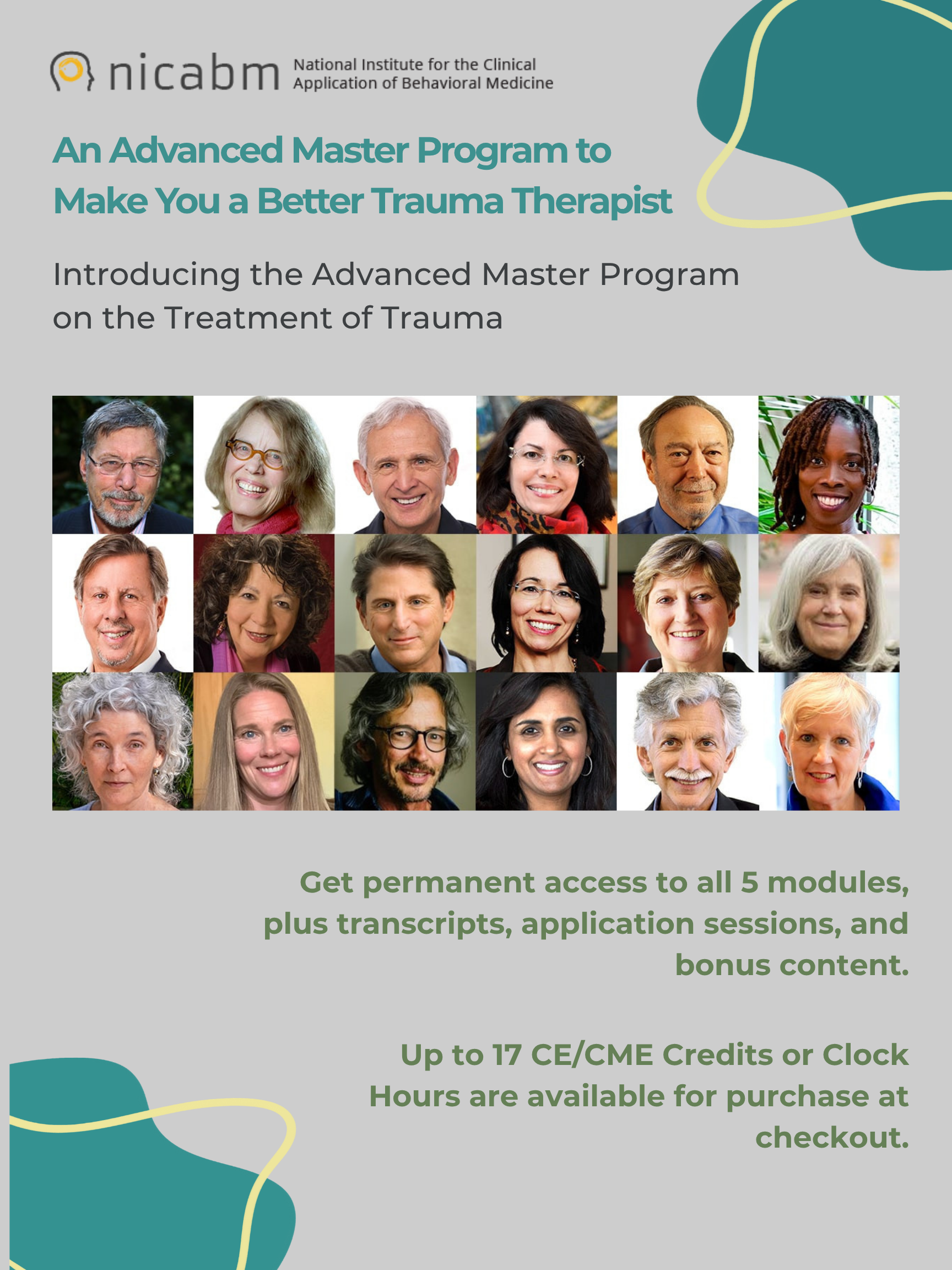
An Advanced Master Program to Make You a Better Trauma Therapist
Treating trauma is some of the most demanding, complex work we do. When a patient has experienced trauma, many of the ways we’ve been trained to establish safety and build rapport may fail us. For a client who’s experienced trauma, relationships might feel unsafe. Eye contact can be frightening. Perhaps most challenging, patients can get easily triggered during their session.
When this happens, their nervous system gets flooded, cognition is knocked offline . . .
. . . and they may not be able to process much in words.
At this point, cognitive behavioral approaches, psychoeducation, and insight-based techniques become ineffective, or even counterproductive. But the way we understand trauma and how to treat it has evolved, even in the last several years. We’ve gone beyond the traditional fight/flight/freeze model, and we’re learning how to work with additional defensive adaptations that clients make to survive trauma. We’re finding new strategies that can help clients feel safe and grounded at the level of the nervous system. We have fresh insights into how to help patients whose trauma history is derailing their current relationships – the very relationships that can be powerful sources of strength, comfort, and support as they heal. And we’re learning how to identify and work with the subtle (as well as obvious) ways that clients dissociate . . .
. . . as well as the equally subtle micro-interventions that can help your client come into the present and become a more stable, emotionally mature adult – capable of intimacy and flexibility, and equipped to see the world with nuance.
When we’re able to help clients rewire their trauma response,
it can have a profound effect on healing. Promising clinical research and evidence-backed strategies can lead our practice in new directions. That’s why we’ve developed an advanced program that gathers all the latest information on the treatment of trauma . . .
. . . and we’re calling all practitioners, all over the world, to join us as we focus on the latest findings on trauma and its treatment.